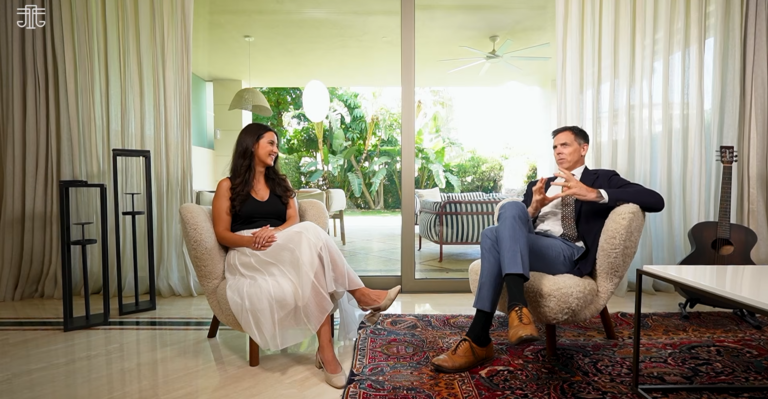
Insights from Sebastian Nieblas of Heidi Fischer Marbella Properties, with Peter Franke and Anna-Sophia, Franke & de la Fuente
Germany is one of the most important source markets for international property buyers on the Costa del Sol — yet it is also one of the most frequently misunderstood. German-speaking buyers arrive well-informed, methodical, and with high expectations around transparency and legal security. Knowing what drives them, and what can stop a deal in its tracks, matters enormously for anyone operating in this market.
To explore these dynamics, Peter Franke, co-founder of Franke & de la Fuente, sat down with Sebastian Nieblas of Heidi Fischer Marbella Properties — a Swiss-German real estate agency established in Marbella for over 30 years, with more than 90% of their client base coming from German-speaking countries. Joining them was Anna-Sophia, German-qualified lawyer at Franke & de la Fuente.
A Market Built on Different Foundations
To understand the German buyer, you first need to understand the German property market — because it operates on fundamentally different principles to Spain’s.
In Germany, property ownership has never carried the same cultural weight. As Anna-Sophia explained, renting is entirely normalised:
“It’s the most common thing that as a German, you live your whole life renting a flat.”
— Anna-Sophia, Franke & de la Fuente
Sebastian Nieblas elaborated on what this means structurally: “The stability and the price rise is much higher in Germany. So we have a very stable long-term market in Germany, while the price is very much dynamic here in Spain.” He pointed to the volatility the Andalusian market experienced around 2008 as an example of “the roller coaster experiences that we have once in a while here in Spain” — something that simply does not exist in the German market, and that shapes how German buyers read price movements here.
Part of what underpins that German stability, Sebastian argued, is legislative consistency: “The Spanish laws change depending if we are more right or left orientated, politically speaking. In Germany, that doesn’t really influence that much.”
The Notary: Where the Two Systems Diverge Most Sharply
One of the most practically important differences between the Spanish and German systems lies in what actually happens at the notary — and what it means.
Sebastian put it plainly:
“In Spain, when you walk out of notary, you walk out with the keys, you are the owner. In Germany, when you walk out of the notary, the process is not finished yet.”
— Sebastian Nieblas, Heidi Fischer Marbella Properties
Anna-Sophia expanded on why this distinction matters:
“Here in Spain, you finalize the whole process at the notary. And in Germany, at some point you start it” — because in Germany, the buyer does not become the new owner until the land registry registers the purchase contract.
— Anna-Sophia, Franke & de la Fuente
For German buyers, this is not a minor technicality. It shapes their entire understanding of when a transaction is complete — and requires careful explanation from both the agent and the legal team.
Peter Franke highlighted the broader regulatory gap this reflects. In Germany, real estate agents must be registered by the Chamber of Commerce and operate under the civil code. In Spain, no such licensing requirement exists. This means the responsibility for legal certainty in property transactions falls squarely on the lawyers. As Sebastian stressed, “it is very important to have a trusted partner here for the buying process and then a legal trusted partner for the whole buying process.”
Transparency Is Not Negotiable
If there is one word that defines the German buyer’s expectations, it is transparency. In Germany, Sebastian explained, “the price you see is the price you’re going to pay for it” — all details are already on the table. When properties in Spain are marketed without complete information, or turn out to be unavailable once a client shows interest, the effect on trust can be immediate and lasting.
” That trust and the transparency is very, very important with a German-speaking client ” — and that expectation extends to language. Sebastian’s team, which is itself Swiss-German, goes beyond simply speaking the language: “we speak Swiss German to them. And especially as well, the language base — not that we just speak their language, but we think like them as well.”
The point, he concluded, is that “the German, in this sense, expects to receive the same treatment, the same transparency as he gets in his country.”
Anna-Sophia added that this need for clarity extends even into legal compliance procedures. When German clients are asked to provide sensitive personal documents — for anti-money laundering checks, for example — they want to understand why. “If you can really explain that to them in their language, they become secure and they rely on you.”
The Decision Takes Longer — and That Is Normal
German buyers are not slow. They are thorough. Sebastian noted that data from 2016 already showed the buying process for a German-speaking client averaging around six months — with multiple viewing trips across different periods — compared to roughly three months for other nationalities. Since then, “the buying process for a German or German-speaking client could be 6 months” or more.
Part of the reason is the price volatility they observe. Accustomed to a stable market at home, German buyers sometimes arrive expecting prices to come down — and patience is built into their approach.
This means the agent’s job is more than property knowledge. As Sebastian put it, “knowing well the properties is 50% of our job with a German client. The other 50% is based on legal issues and financial issues.”
One practical example of that legal awareness: energy efficiency certificates. In Germany, energy standards are already heavily regulated, and German buyers actively ask about them — and will sometimes invest in upgrading a property after purchase to meet the standards they expect.
A Commitment to Delivery
There is one cultural trait Sebastian was particularly direct about, and it applies as much to lawyers as to agents: if you make a commitment, you keep it.
“If you decide or if you say that you’re going to deliver, you have to deliver. And if you say you’re going to deliver today, you have to deliver today.” It is, as he put it, a cultural issue — and one that cannot be underestimated.
The Legal Dimension Is Central
Peter Franke drew the episode together with a point that reflects the firm’s own approach: “Have everything in order, prepare well, because the German clients are doing their own homework — thoroughly. Build the trust, and know your areas and know your properties, and guide your clients throughout the process together with a lawyer” — because “the legal aspect for German clients is also very, very important.”
That combination — a trusted real estate partner who speaks the language and understands the mindset, working alongside a law firm that can navigate the structural differences between the two legal systems — is what the German buyer on the Costa del Sol is genuinely looking for.
This article is based on an episode of The Country Files, a podcast series by Franke & de la Fuente exploring the perspectives of international buyers in the Andalusian property market.