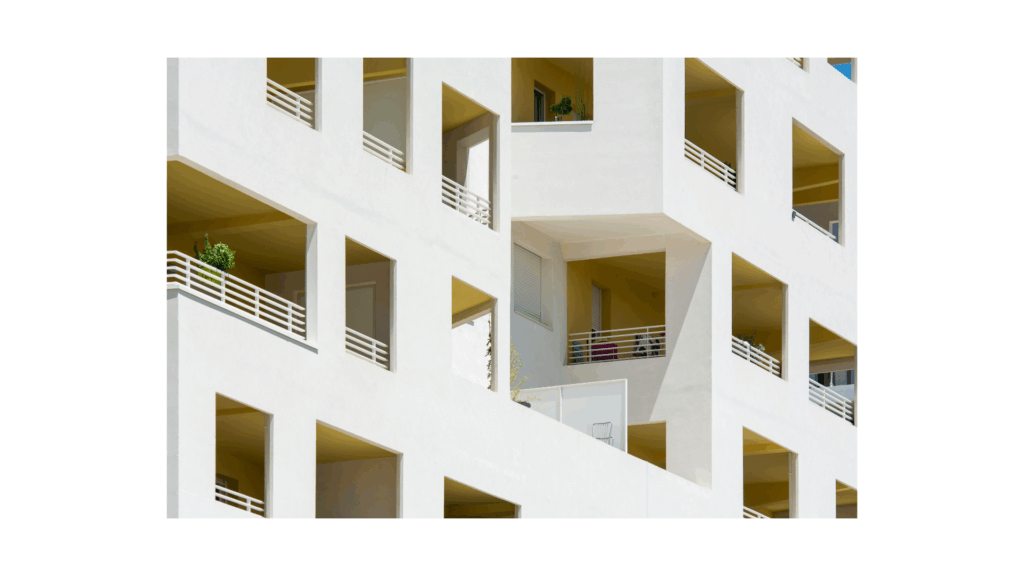
The Supreme Court has once again ruled on the limits of property rights within communities and housing developments. In its ruling no. 1.254/2025, of 16 September, the Civil Chamber reiterated that an owner cannot carry out works on their home that alter the aesthetics of the complex or harm other neighbours, even if such works are carried out in private spaces such as terraces.
The dispute originated in a residential development in Madrid, where the owners of a semi-detached house enclosed the upper terrace with a municipal licence. However, the neighbours considered that the renovation disfigured the façade and obstructed the view of the complex, so they challenged the action.
Both the Court of First Instance and the Provincial Court ruled in favour of the community, and the Supreme Court confirmed the obligation to remove the enclosure, consolidating the doctrine on the prevalence of collective interest over individual interest in the field of horizontal property.
The core of the debate centred on the interpretation of Article 24 of the Condominium Law, relating to private real estate complexes. The defendants argued that the enclosure was built in an area for exclusive use, and therefore the community should not intervene.
The Supreme Court, however, recalled that the rights of owners in a residential development are not absolute. The exercise of property rights must be harmonised with coexistence and the common interest, so that no owner can alter the configuration of the complex or undermine the rights of others.
The ruling emphasises that works in private spaces can also have an impact on the community. In this case, the modification altered the aesthetic uniformity of the row of terraced houses and affected the views of other residents, which justified the community’s intervention.
Furthermore, the Internal Regulations, approved by the community in 2001, expressly prohibited enclosures or alterations that would disrupt the aesthetics of the complex. The Supreme Court upheld the validity of this rule, noting that it is a legitimate instrument that reinforces coexistence and the architectural coherence of the complex.
One of the most relevant points of the ruling is the distinction between the planning permission and the internal rules of the community.
The court clarified that an administrative licence does not legitimise a project in the eyes of the owners’ association ( ). This authorisation only applies to the administration, but does not exempt the owner from complying with the internal statutes and regulations, which govern private relations between neighbours and protect the aesthetics of the complex.
Consequently, a building project may be legal before the local council but illegitimate within the community if it violates the rules that guarantee uniformity and coexistence.
The ruling consolidates a clear line of case law:
- The right of ownership in a residential development cannot be exercised in
isolation. - Aesthetic harmony and the collective interest prevail over individual
modifications. - A municipal licence does not replace the authorisation of the community.
- Internal regulations are fully valid and binding, provided they do not contradict
the law.
In short, the Supreme Court reinforces the balance between private property and community life, reminding us that the value of a residential complex also depends on the preservation of its image and architectural coherence.
Owners who wish to expand or improve the use of their home can resort to solutions that increase functionality without violating community regulations.
One effective option is to reorganise the interior of the property, making better use of the available space with custom-made furniture, movable partitions or built-in wardrobes. Reversible elements, such as retractable awnings or lightweight pergolas, may also be used, provided they respect the aesthetics of the complex.
From a legal standpoint, it is possible to request specific authorisations from the owners’ association. In some cases, the community may allow modifications under specific conditions, especially if the owner can prove, by means of a technical report, that the intervention does not alter the visual harmony or harm third parties.
The use of materials and finishes similar to the originals, together with transparent communication with the community, usually facilitates the approval of improvements that are compatible with the environment.
This new Supreme Court ruling reinforces an essential idea: private property within a community is subject to reasonable limits designed to protect the common interest. Renovating a home is possible, but always with respect for aesthetics, internal rules and the rights of other neighbours.