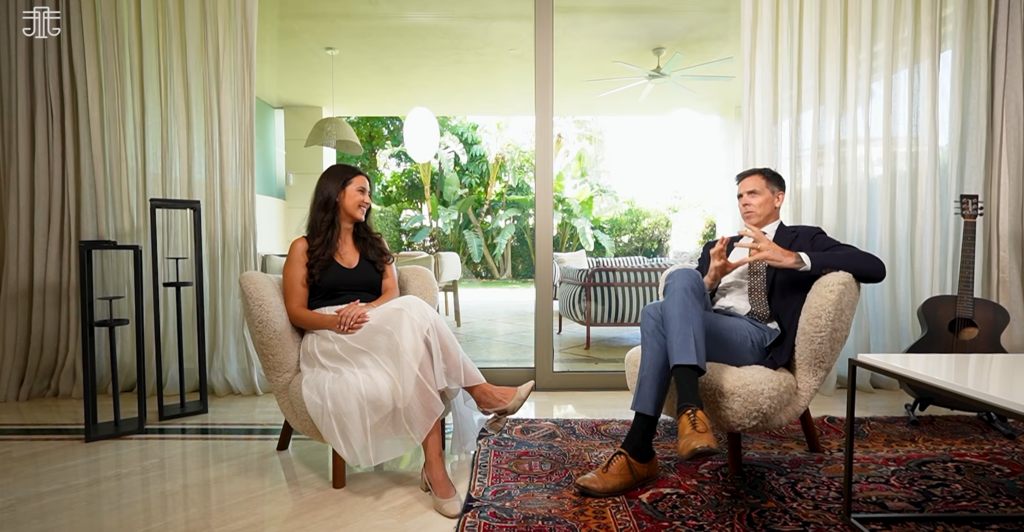
Welcome to Deep Dive, a new podcast series by Franke & de la Fuente Abogados. In our first episode, Partner Peter Franke sits down with Raquel Parrado, Senior Associate at our Estepona office, to talk honestly about what really happens when international buyers purchase property in Spain — not just the textbook process, but the real challenges we see every day.
Buying a property in Spain — particularly along the Costa del Sol and in Andalucía — is rarely as linear as the guides make it look. As Peter puts it in the episode:
“So the purchase process is very rarely linear. It’s never straightforward.”
Based on years of assisting international clients with real estate investment, relocation, and tax planning in Spain, our team has identified four areas every prospective buyer should research and prepare before making an offer.
1. Financing: Mortgages and the Real Cost of Buying
Before anything else, buyers need a clear picture of their budget — and that means more than just the purchase price.
Non-resident buyers can absolutely apply for a mortgage with a Spanish bank. As Raquel explains:
One critical distinction buyers often miss: an early conversation with a bank typically results in a mortgage simulation, not a binding offer. Understanding this difference matters for setting realistic expectations.
It’s also essential to factor in transaction costs on top of the purchase price. For a resale property in Andalucía, buyers should budget for:
- Transfer tax — normally 7%
- Legal fees — typically around 1%
- Notary and land registry costs
In total, this adds up to roughly 9–10% on top of the purchase price. As Peter warns:
Crucially, mortgages typically only cover a percentage of the purchase price — not the transaction costs. Buyers need to calculate their total spend, including these additional costs, before committing.
2. Immigration and Residency: What’s Your Purpose?
Your immigration status significantly shapes how a property purchase should be structured. The starting question, according to Raquel, is:
European citizens can generally spend time in Spain freely. Non-EU citizens looking to stay longer than the standard allowance need to explore visa options, such as:
- The Digital Nomad Visa
- The Non-Lucrative Visa
- Backed by potential tax planning strategies
As Peter notes, immigration questions and tax questions are closely linked — becoming a tax resident in Spain carries its own set of implications that should be assessed early.
3. AML Compliance: Where Does the Money Come From?
Anti-money laundering (AML) compliance is a step that catches many international buyers off guard — not because it’s especially difficult, but because it’s unfamiliar. Every property purchase in Spain requires a compliance file answering two core questions, as Peter summarizes:
“That’s basically right. Who are you and where is the money coming from?”
For straightforward cases — funds from employment, a property sale, or inheritance — this process is quick. But international clients often have more complex financial backgrounds: funds held across multiple countries, company structures, trusts, or family transfers. As Raquel explains, even complex cases like US trusts can be handled — it simply requires a more extensive documentation process:
“It can be done. It’s not a no. You just need to endure a further extensive AML process.”
The key takeaway: preparing a well-documented, clearly indexed compliance file from the outset significantly reduces delays with banks, developers, and notaries.
4. Taxes: What Will You Actually Pay?
Unsurprisingly, taxes are the most common question clients ask. As Raquel puts it:
The answer depends heavily on tax residency status:
- Non-residents face property tax, non-resident income tax, and potentially Solidarity Tax on high-value assets.
- Tax residents face a broader set of considerations, including income and dividend taxation — this is where careful planning adds the most value.
Buyers considering purchasing through a company should also weigh the tax implications carefully, based on whether the property is for personal use, rental income, or resale — each scenario has a different optimal structure.
The Bottom Line
Financing, immigration, AML compliance, and taxes — as Peter summarizes in the episode:
Getting clarity on these four areas before signing anything gives buyers a much smoother, more confident path through the purchase process.
🎧 Listen to the full conversation: 4 Things You Need to Know Before Buying in Spain — where Peter Franke and Raquel Parrado go into detail on each of these points, with real client examples from our daily practice.
Ready to start your property purchase in Spain? Our team at Franke & de la Fuente is here to guide you from the very first step. Contact – Franke & de la Fuente to schedule a consultation.