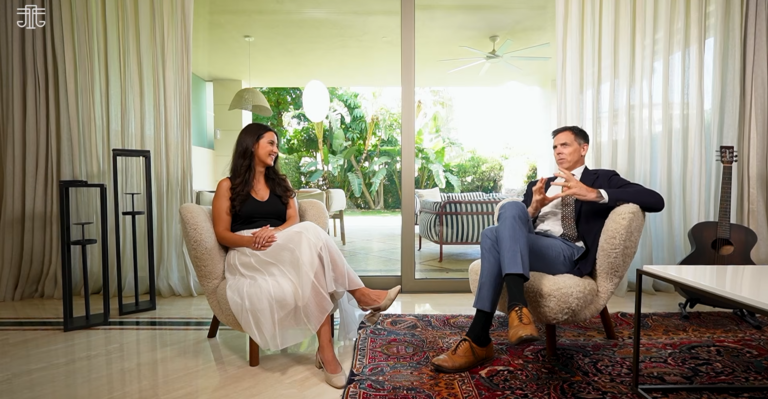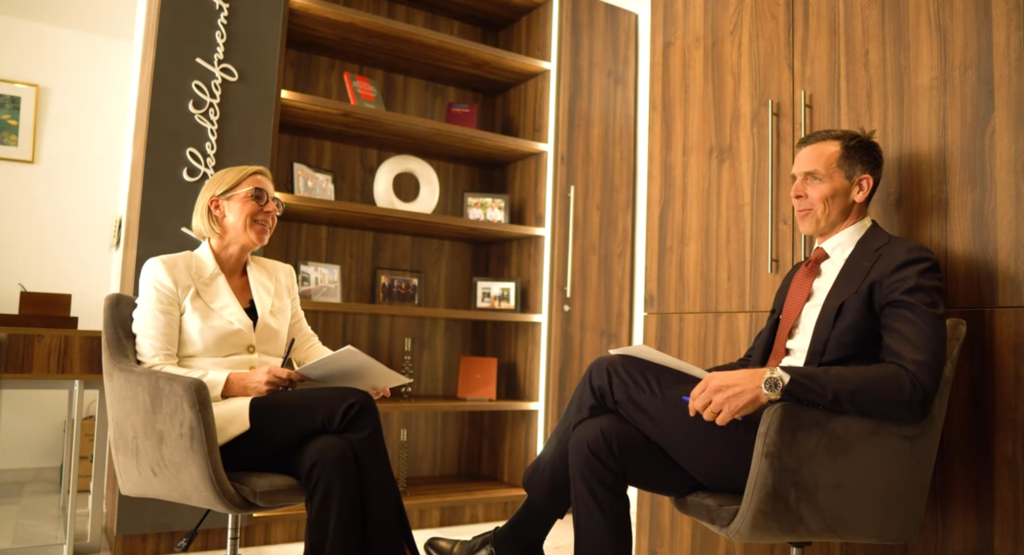
Peter Franke, co-founder of Franke & de la Fuente, sat down with Agnes Marciniak-Kostrzewa — founder of Agnes Inversiones and one of the most experienced specialists in Polish buyer behaviour on the Costa del Sol — to discuss what is driving one of the market’s fastest-growing buyer groups, and what international property professionals need to know to serve them well.
A Market Built on Three Decades of Experience
Agnes Marciniak-Kostrzewa has been working on the Costa del Sol longer than most agents have been in the industry. “I’ve been living here for nearly 30 years,” she told Peter Franke during the latest episode of The Country Files. Her Marbella-based agency, Agnes Inversiones — founded in 2006 and staffed entirely by women, all fluent in Polish, Spanish and English — has remained exclusively focused on the Polish market ever since. Today, more than 80% of their clients are Polish.
That single-market focus has given her an unusually precise view of how Polish buyers think, what they prioritise, and where the friction points arise when they purchase property in Spain.
The Pandemic Turned Aspiration into Urgency
For years, Polish buyers came to the Costa del Sol primarily for holidays or as a buy-to-let investment strategy. That dynamic shifted decisively after 2020.
“Before pandemic, it was more buy to rent or buy to spend holidays here. And after pandemic, it’s some kind of the click, you know, in our heads that, okay, we want to live from now. We don’t want to postpone our plans to be happy and have the apartment in Spain in a few years.”
— Agnes Marciniak-Kostrzewa, Agnes Inversiones
The result has been a structural shift in buyer intent. Polish families are now arriving with plans to combine remote work, schooling, and longer-term residency — with fathers splitting their time between Poland and Spain, and children frequently enrolled in local international schools.
Geopolitical Anxiety Is a Real and Growing Driver
The war in Ukraine has added a powerful emotional dimension to the Polish buyer’s decision. Poland sits directly on the conflict’s doorstep, and Agnes describes how proximity to the war has made geographic distance feel like security.
“You see Ukrainian children, you know, in our schools,” she said, and as a result, Polish buyers “want to have something, you know, that the farther the better” from the tension at home. Marbella, she explained, represents the answer: “Marbella, where you can go farther. The Europe, it’s, you know, then you have the ocean.”
The speed of that anxiety was visible from the very first day of the invasion. “I got so many phone calls that I just had, you know, like a notebook and trying to take all the telephones and answer and send the offers, you know, ASAP” — with some buyers prepared to purchase sight unseen, on a video call. That urgency has not abated. “Now after the Trump announcement, once again it came back. So we have like so many leads every day and it’s an urgency.” Buyers, she says, “want to have something just in case something will happen.”
Investment Logic, Not Just Lifestyle
Beyond security, Polish buyers are financially motivated. “A lot of them, they want to diversify their funds,” Agnes explained — mirroring a rental portfolio they may already hold in Poland by adding Spanish assets. Financing is more accessible than many expect: “the mortgage is quite easy to get in Spain compared to Poland,” with banks typically lending against 50% of the property’s value and accepting well-documented income profiles with ease.
Agnes also addressed a common misconception about the source of Polish wealth. “Polish people pay taxes, it’s everything on the papers,” she said — making the mortgage application process straightforward for buyers with clean financial records.
There is also a quality-of-life argument that, Agnes suggests, even compensates for Spain’s higher tax burden for residents:
“You know what happens when you are here in the sunny weather and you are really more relaxed and you live more, you know, outdoor? Then you have very good ideas in your company and probably you’ll make more profit in Poland.”
— Agnes Marciniak-Kostrzewa, Agnes Inversiones
Peter Franke agreed: “You weigh up the negative and positive.”
Where They Buy — and What They Buy
Polish buyers are not concentrated in a single enclave. “No, they really want to integrate. You know, we are very open-minded, I would say,” Agnes noted, adding that many make a genuine effort to learn Spanish. Agents working with Polish clients should not assume they require a specific community or neighbourhood.
In terms of geography, Agnes Inversiones typically focuses on the coastal stretch: “We are really recommending, you know, the area from Estepona to Malaga, and they are focusing always” on proximity to the water — “the closer to the sea, the better.” Popular areas include Elviria, Calahonda, Benalmádena and Estepona, as well as locations near golf courses for those who play. The preference leans heavily towards new builds: “70% is new development and 30% is resale.”
The Quality Question — and the Surveyor
There is one area where Polish buyers consistently raise an eyebrow: build quality. Poland has a strong tradition of craftsmanship, and buyers accustomed to high-specification finishes in Warsaw or Kraków are often surprised — sometimes pleasantly, sometimes not — by what Spanish new developments offer.
The pleasant surprise: “they get surprised that they can get really the furnitures, few lamps, and they can move in.” In Poland, new builds are typically sold as bare shells — walls up, nothing fitted.
The less pleasant surprise is the finishing quality itself, which Agnes describes as falling short of Polish standards. This is precisely why she always recommends a technical inspection before completion. “It’s always to protect yourself. It’s, you know, small money, and you can sleep okay.” Peter Franke echoed the advice — it is a recommendation Franke & de la Fuente makes routinely.
The Rules They Don’t Know About
The Spanish regulatory environment holds several surprises for Polish buyers, and navigating these differences is where professional guidance becomes essential.
Purchase costs are net of tax. In Poland, advertised new-build prices include VAT. In Spain, they do not. “The prices which are published here on the websites” are net prices — “they are net prices, because it’s quite a big surprise in Poland when you buy from the new development that the VAT tax, it’s already included.” In Spain, buyers must add 10% IVA plus 1.4% stamp duty — a combined 11.4% on top of the purchase price. As Peter Franke put it: “Step 1, tell them the real price to make the budget.” People feel not well informed if we tell them post factum.
Tourist rental licences are not automatic. Polish buyers are often unaware that short-term rentals require a specific licence in Andalucía — and that some developments or communities prohibit them entirely. Agnes is direct about the consequence: if a buyer intends to rent, legal due diligence is not optional. The lawyer must verify that all documentation is in order and that a licence can actually be obtained before contracts are signed.
There is no buyer’s agent in Poland. The Polish market operates on exclusive seller listings, with no regulatory framework for intermediaries since deregulation in 2014. As Peter Franke observed, the concept of a buyer’s agent working in the purchaser’s interest simply does not exist in Poland — which means the role that both Agnes Inversiones and Franke & de la Fuente play needs to be clearly explained to clients from the outset.
Transparency, Timekeeping — and the Notary
Two cultural traits define the Polish buyer’s expectations of the transaction process: transparency and punctuality. “Polish clients, we really like transparency. We really talk in the open way, and we expect it from the other side.” On timing, Agnes is equally clear: “They are a bit like Germans from this, when you agree on something, you shake the hand, it should be done like this.”
One final cultural detail: in Poland, the notarial signing is a private, ceremonial occasion. The notary waits for the buyer. In Spain, by contrast, the notary’s office can resemble a waiting room — something that can deflate what should be a landmark moment. Agnes tries to compensate with champagne and a clean property on handover day. Peter Franke noted that clients who complete through Franke & de la Fuente avoid the general queue entirely — the firm arranges private notarial appointments as a matter of course.
This conversation was recorded as part of The Country Files, a podcast series by Franke & de la Fuente exploring how buyers from different countries approach purchasing property on the Costa del Sol. Agnes Marciniak-Kostrzewa is the founder of Agnes Inversiones, Marbella, specialists in the Polish buyer market since 2006.